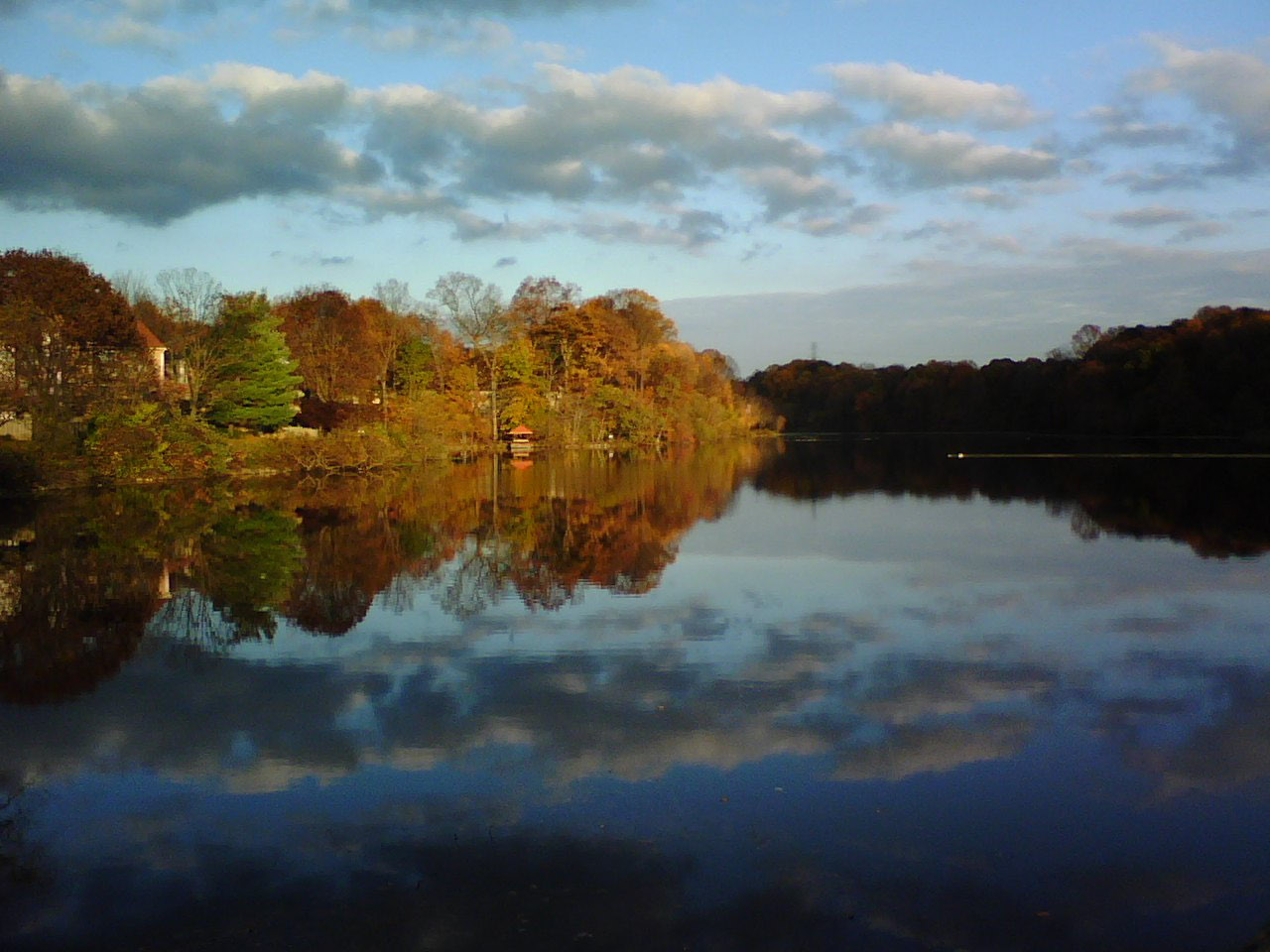
An update from Elaine Pardoe of the Committee for Lake Elkhorm Environmental Restoration...Hello CLEER members,
Another dredging delay. Chick Rhodehamel, head of CA's Open Space Division, reported to the Owen Brown Village Board at its meeting July 21st that none of the responses to the request for proposals were satisfactory because they either exceeded the budget or did not meet requirements. New RFPs have been issued with an August 13th deadline. Mr. Rhodehamel expressed the hope that the dredging will still be able to proceed in the near future.
For more information see ColumbiaAssociation.com--> Get Informed--> Lake Dredging.
On a happier note, our task force working on a pilot project to develop a plan to manage the plant growth under and around the transmission lines beside Lake Elkhorn approved a final draft of a plan late last month.
To review the history, the task force was formed under the auspices of CLEER and the County Office of Environmental Sustainability after extensive vegetation cutting by BGE in January 2008 caused concern among community members. It includes BGE executives, who have become enthusiastic and hard-working partners in our effort to improve our Lake environment, as well as county and state officials, a CA representative, and me.
Why was the cutting noticeably different from previous years? After the massive tree-caused northeast blackout in 2003, all power utilities in the nation were put under new orders from the federal government to make sure trees do not get too close to power lines as they sag in the heat; otherwise they face huge daily fines. To operate within those constraints and at the same time allay residents' aesthetic and environmental concerns, BGE hired a well-known expert in transmission line vegetation to develop a plan. The goals of the task force were to have a plan that manages the Lake Elkhorn line in such a way that it is protected from tree-caused outages, while at the same time the plants under it improve the habitat for pollinators and other wildlife and add to the attractiveness of our surroundings.
The plan is built upon integrated vegetation management (IVM), a methodology which coordinates several different tactics to come up with a plan that assures power reliability while yielding the most protection for the natural and human environment. IVM is the recommended best practice agreed upon by the electric industry, all federal land management agencies and the EPA. Our consultant has a web site (
ivmpartners.org) that explains IVM, but you may also want to Google the term to get more viewpoints. You may also email me for information.
The alternative to IVM would be mowing once or twice every year to remove vegetation that would otherwise threaten the power lines. Why so frequently and aggressively? To combat alien woody plants such as ailanthus (tree of heaven), which if cut, rather than sprayed, sprouts several trunks from each cut that grow many feet every year. Only herbicide application effectively kills it. Ailanthus is an extreme but very common example; a large vigorous
patch of it lives under our lines right now. Mowing itself has environmental side effects: compaction of soil that increases runoff into the Lake, destruction of bird nests, air pollution, noise pollution, and leakage of motor oil and hydraulic fluid onto the soil and potentially down into the Lake.
Specifically, what does the plan involve? First, an application of herbicides on the entire pilot site, which would happen only once, this fall. It would be targeted to get rid of tree seedlings and invasive alien plants. Without competition from those plants, we should be able to watch the original native plant culture return next spring, after decades of assault by ground cultivation and invasive vegetation. After the one-time use of herbicides on the whole site, the only maintenance needed would be "point-and-shoot" application the following year and then every 3-4 years, to remove any single plants that reappear. With the exception of a member who remains concerned about herbicides, the task force members are convinced that this is the plan that best protects the quality of our life and our environment and at the same time our power supply.
The members of the task force want the community to know about the features of this plan before it is implemented. We will be holding a meeting for the community on September 22nd at 7PM in the Owen Brown Community Center on Cradlerock Way. We'll get notices out in as many ways as we can, but meanwhile mark your calendars and tell your neighbors!
Elaine